
Phillips County Criminal Docket Searches
Decide what you want first: a hearing date or a case history. For dates, the Phillips-filtered Colorado Judicial Docket Search is free and lists scheduled court events. For history, you want a chronological criminal register of actions, or ROA. An approved vendor sells it. The Judicial Branch Access Guide names that vendor. Vendor data is current. But it is not the official court record, and it shows no document images.
The Phillips Combined Court clerk is the fallback for everything official. Requesters can file the online Record/Document Request Form, stop at the second-floor counter, or mail the printable form. They can also call 970-762-7010. The clerk accepts email at PhillipsClerksOffice@judicial.state.co.us and fax at 970-458-7742. Call ahead to confirm whether a public terminal is available. Bulk court data has a separate route. It goes through the Judicial Department's separate data-request channel, not an individual criminal case request.
- Choose County Court for an M misdemeanor or District Court for a CR felony.
- Enter the four-digit year, class, and sequence from the notice or filing.
- Read the newest setting, appearance type, courtroom, and hearing label.
- Use an approved ROA vendor when the full event chronology is needed.
- Ask the clerk for the named pleading, order, or certified disposition.
Phillips County Criminal Docket Case Codes
A Colorado case number has three parts: year, class, and sequence, like 2026CR11. The statewide form puts the year in its own field. Class and serial number follow. CR marks a District Court criminal case. M marks a County Court misdemeanor. T covers traffic. JD signals juvenile delinquency, where public access is narrower.
Search the exact number when you can; common names invite false matches. The free calendar also allows party and attorney searches. But it demands at least one filter beyond the date. When a Phillips County criminal docket does not appear, check spelling first. Widen the date range. Confirm the court level. A clerk name search for a nonparty, with an ROA, costs $5. Providing the number avoids that charge and the ambiguity. A blank result can also mean an archived case. It may point to a restricted class or a municipal matter outside this system.
Criminal Dockets: What They Show
Open a Phillips County criminal ROA and you see the basics first: case number, court, division, filing date, caption, and status. Below that come party roles that are public, counsel, charge details, dated events, settings, and any disposition or sentencing entry that may be released. Financial fields may show costs or bond activity. Treat those figures as clues, not conclusions. They do not replace the sentence order. An ROA line never includes the filed image behind it.
| Header | Case class, sequence, District or County Court, division, filed date, and status. |
|---|---|
| Charges | Each count, offense text, and classification where entered, with separate outcomes possible. |
| Events | Complaint, advisement, motions, plea, trial, minute orders, disposition, and review entries. |
| Settings | Date, time, duration estimate, hearing type, appearance mode, location, and courtroom. |
| Documents | Titles may be listed, but copies must be requested from the Clerk of Court. |
Work count by count. Then read from the newest entry backward. A "Dismissed" tag beside one count leaves the others alive. A "Disposition Hearing" entry only names a setting. It is not the result the judge entered. To know what truly happened, read the plea, verdict, disposition, and sentence entries together.
Phillips County Criminal Docket Two-Court Path
One felony, two dockets. Phillips County Court takes the complaint, the initial advisement, bond work, and any eligible preliminary hearing. If the case proceeds, Phillips District Court then picks up the prosecution. It uses a District Court CR number. That is why County Court entries can coexist with a later District Court case for the same matter. A bind-over does not erase the value of the first docket, since it explains the early stages and may point to the new case number.
Phillips felony docket flow: County complaint › Advisement and bond › Preliminary stage › District Court filing › Arraignment › Plea or trial › Sentence and review.
The Judicial Branch's official County Court overview lays out how the limited-jurisdiction court handles criminal matters, from petty offenses and misdemeanors through the preliminary stages of more serious charges.
The routing rule is simple. Offense level and procedural stage decide whether a criminal case sits in County Court or District Court.
Criminal Case Stages on the Docket
Every stage should leave its own Phillips County criminal docket entry. A complaint or information states the charge. Advisement tells the accused about the allegations and rights. Arraignment is where the plea gets addressed. Pretrial settings track discovery, negotiations, motions, and trial readiness. The merits result comes from a plea or verdict. The sentence order then records the court's consequence after a conviction or an accepted plea.
Docket flow: Filing › Arraignment › Pretrial › Plea or Trial › Disposition › Sentencing.
Later docket entries can matter just as much. Probation review, restitution, compliance checks, post-sentence motions, or a notice of appeal may keep the register active long after the first outcome. When probation shows up in the docket, the Phillips County Probation page gives the local contact route and office details for the department supervising the case.
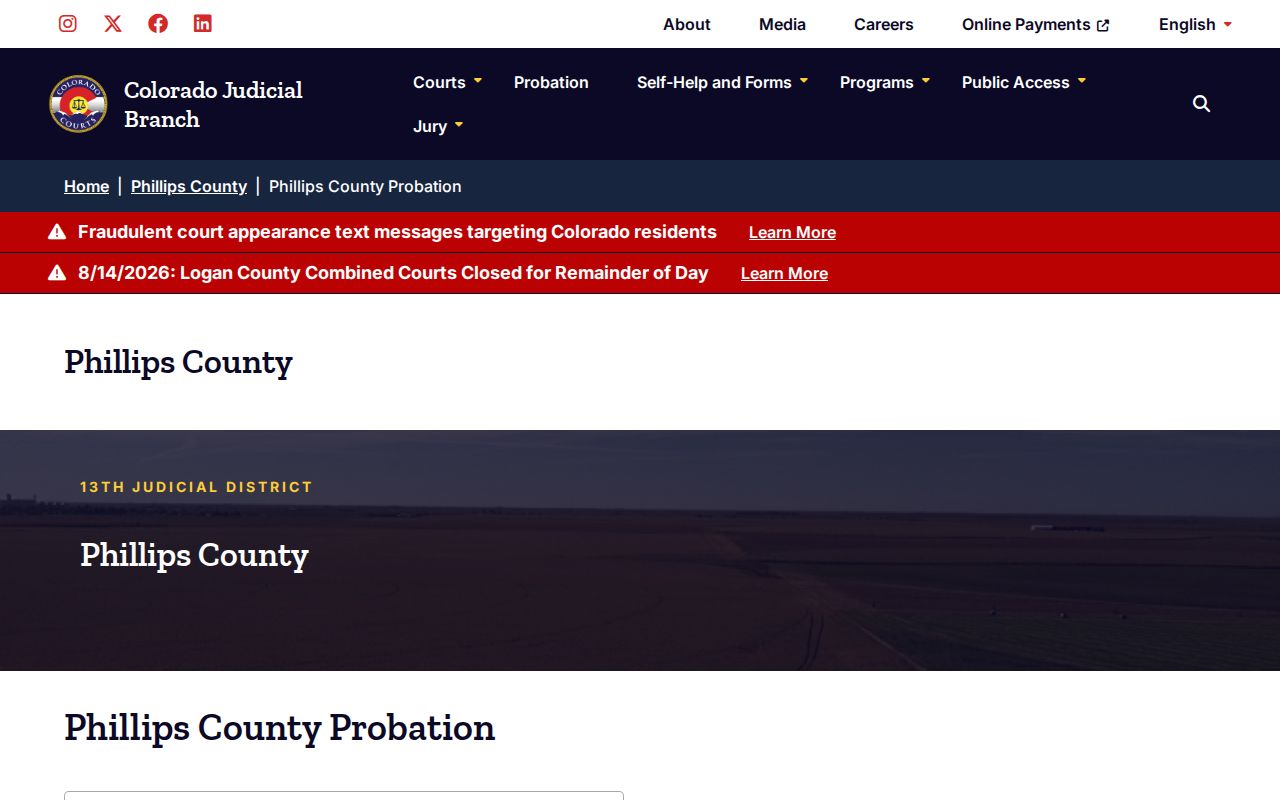
That page is a good way to reach a supervision officer. It is not the public criminal register of actions. Probation records may be confidential, so treat the office as a contact route rather than a docket lookup tool.
Phillips County Criminal Docket Outcome Traps
Short labels invite overreading. Take bond forfeiture: it deals with security for release, not guilt. A guilty plea entry tells you little until the accepted plea and sentence documents sit beside it. Deferred judgment and deferred sentence are not dismissals, whatever they sound like. And an acquittal on one count leaves another count free to end differently, so check each count before drawing a conclusion about the whole case.
- Disposition hearing
- A scheduled event at which an outcome may be addressed, not proof of a specific result.
- Dismissed
- The identified count ended; inspect every count before deciding the case is closed.
- Sentence entered
- The court recorded punishment or an order after guilt was resolved.
- Appealed
- A reviewing court has a separate docket while the trial ROA records notices and transmission.
Work from the newest entry for each count. Then ask the clerk for the filed Disposition/Sentence Order. A vendor summary can point you to that document, but only the clerk issues the official or certified copy.
Phillips County Criminal Docket Courts
Two courts split the criminal work. Phillips County Court, Division 4, takes misdemeanors, traffic matters, felony complaints, and bond issues. It also handles the preliminary stages of cases. Phillips District Court handles the felony prosecutions themselves, along with District Court post-judgment work. Both courts sit in the 13th Judicial District. They share one Clerk of Court at Phillips Combined Court. A municipal ordinance citation stays with the city or town court, if one is convened. It moves into the state system only when a later appeal or transfer places it there.
| Court | Criminal docket work | Search route |
|---|---|---|
| County Court | Misdemeanors and early felony stages | County filter with County Court and the known class |
| District Court | Felony prosecution and later criminal work | County filter with District Court and CR class |
| Municipal court | Local ordinance citations where filed | Contact the issuing municipality |
Federal cases run through an entirely separate system. For the assigned federal image, the District of Colorado CM/ECF page is the official source showing how that court's electronic case files work.
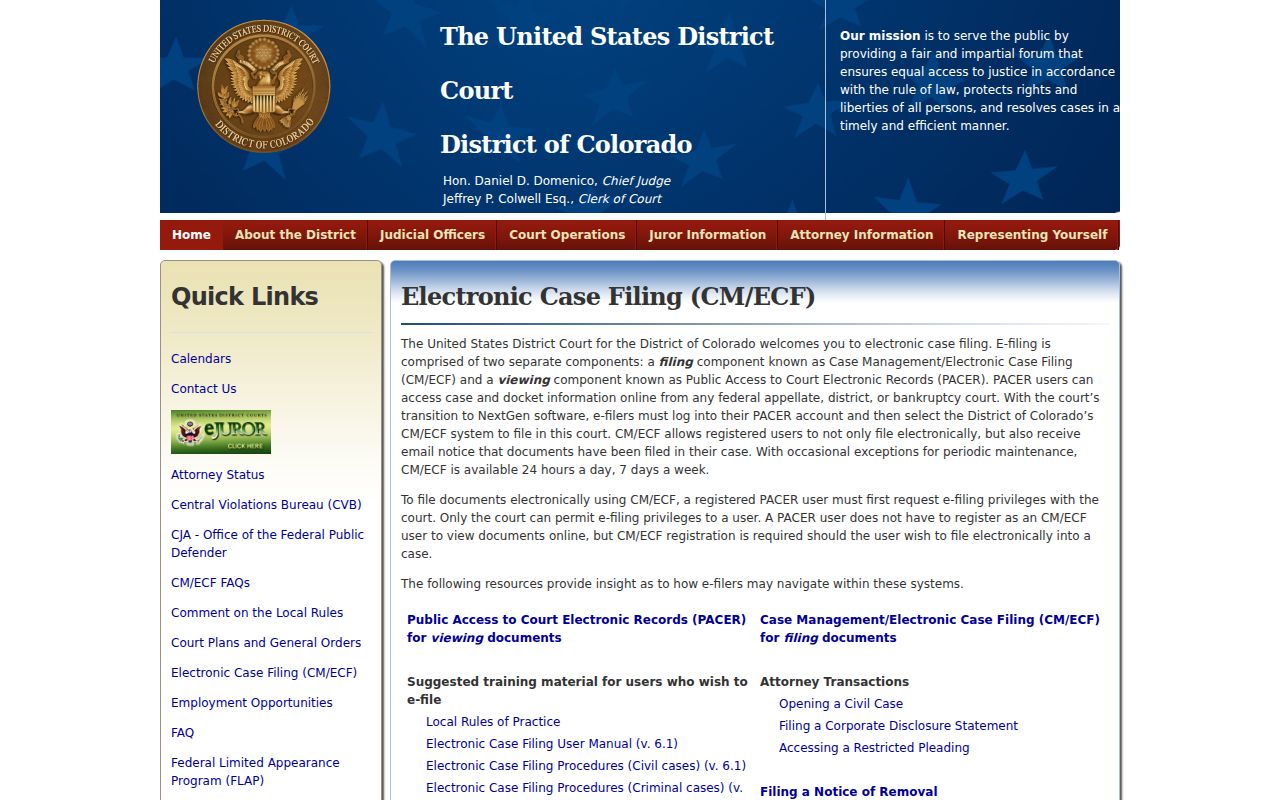
A Phillips state case number will not pull up a federal CM/ECF docket. Read the court named on the filing, then pick the matching system.
Phillips County Criminal Docket Program Check
Phillips County itself lists no county-specific drug, veterans, mental-health, DWI, or reentry court. Care is needed here. A program running elsewhere in the seven-county judicial district does not belong to Phillips simply because the courts share district judges or regional administration. When someone joins a regional treatment program, the public court activity usually stays under the underlying criminal number. A separate docket appears only if an official order creates one.
Verify before searching: Ask the Combined Court clerk or local probation office whether a named program exists, which court controls it, and whether its records are public.
The program name may never show up as its own searchable case class. Start with the base M or CR number instead. From there, keep court entries and supervision information apart, since the two can carry different access limits.
Access Rules for Criminal Dockets
Colorado policy starts from public access, but the courthouse door can open wider than a remote connection. Chief Justice Directive 05-01 governs access to court records and recognizes limits set by statute, rule, and court order. Juvenile records, protected identifiers, sealed matters, and some sensitive documents may be withheld or shown only in limited form. Someone who already has a lawful basis to request suppressed, juvenile, probate, or protected material may still need to show a photo ID. The ID itself grants nothing.
For the assigned sealing image, the Colorado Legislative Council sealing overview is the official source that explains the process state law created.
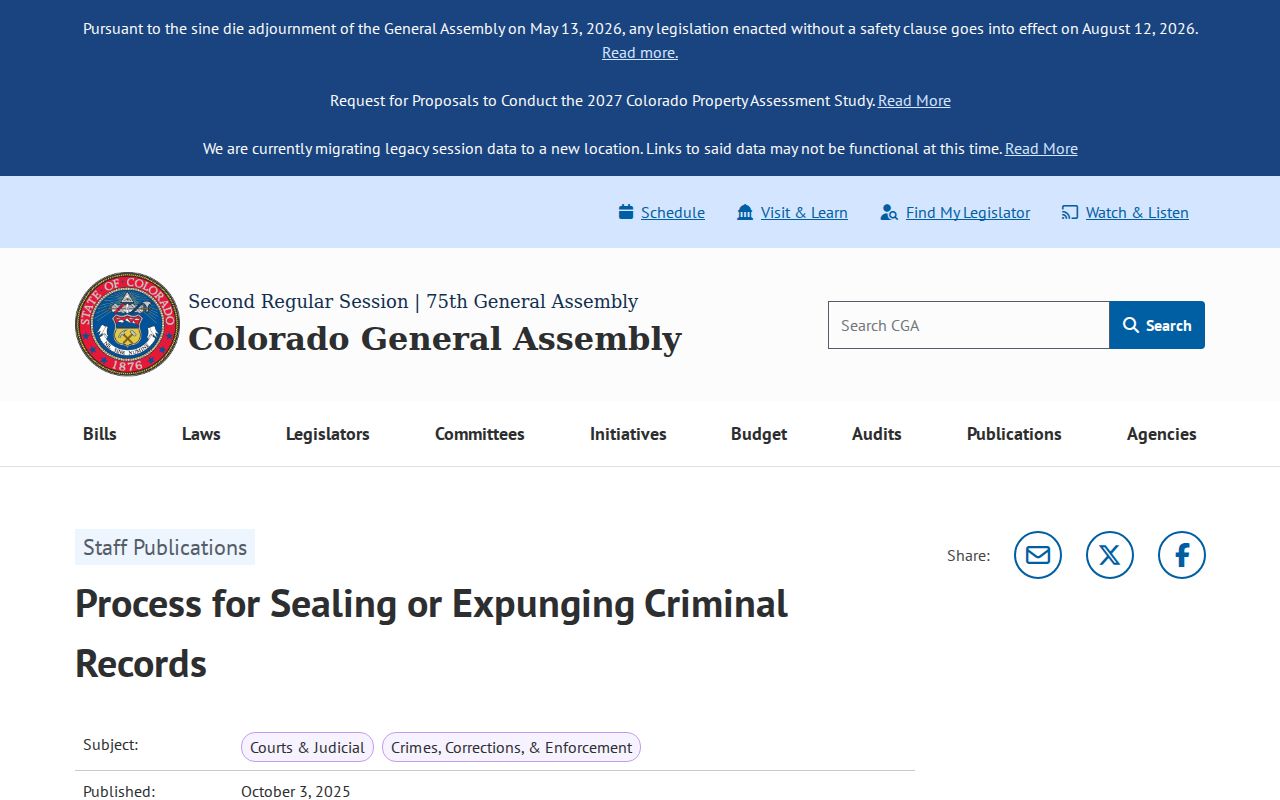
The sealing process carries one key limit worth stating plainly. Sealing happens through the courts under current law, not through simple deletion by a vendor or clerk.
Key rules: CJD 05-01 controls case-record access; Colorado Title 24 contains criminal-record sealing provisions; Title 19 restricts juvenile court and social records.
An empty search result does not prove a criminal case never existed. The gap can come from an error, an excluded class, delayed indexing, an archive, or lawful suppression. What controls is the signed order and the clerk-held file.
Phillips County Criminal Docket Official Copies
Once the Phillips County criminal docket points to the right case and event, ask for the exact document by name. The statewide form offers a Disposition/Sentence Order, Protection Order, Ticket, ROA, and an "Other Documents" field, so give the title and filing date when known. Certification is a separate choice and currently costs $20 per document plus applicable copy charges. Electronic copies are listed at $0.25 per page. The printable form puts paper court copies at $0.75 per page.
You can inspect files at the counter of Phillips Combined Court, 221 S. Interocean Avenue, second floor, Holyoke, on weekdays from 8:00 a.m. to 3:00 p.m. during published hours. Mail requests go to the same court address once payment and delivery terms are confirmed. Archived retrieval is billed at actual cost. The ordinary response target is three business days absent special circumstances, though retrieval and redaction can extend that work.
When the problem is finding a number rather than reading criminal events, start with the separate Phillips County docket search instead. Hold off on sending protected identifiers by ordinary email until the clerk confirms a safe method.