
Phillips County Civil Docket Searches
Start with the free Phillips County Docket Search when you need a scheduled civil hearing. Leave Phillips selected. Pick District or County Court, then add a filter that is not a date. A full case number works best. Party or attorney fields can fill the gap when the number is unknown. Each calendar result lists the date, time, estimated duration, hearing type, appearance type, location, and courtroom. It stops short of the full civil filing history.
For that history, the Colorado Judicial Access Guide points to an approved vendor. CoCourts is one such vendor. Treat the vendor ROA as a real-time summary rather than the official record. It carries no filed images. Official documents arrive through the statewide request form or the Combined Court clerk. Ask at the counter, by mail, or by phone, email, or fax. Phillips does not publish a public-terminal location, so call before making the trip. Compiled court data moves through a separate formal data-request channel.
- Identify the court and class from a notice, pleading, or prior order.
- Search the calendar by full number or a narrow party-and-date combination.
- Use the ROA to identify the exact filing, order, or judgment date.
- Submit a clerk request for the document or certified copy.
Phillips County Civil Docket Jurisdiction Lines
Money and case type split civil filings in Phillips County between two courts. District Court holds the broad docket: domestic relations, probate, and juvenile matters all land there. County Court takes the smaller claims. Ordinary civil suits under $25,000 land there, along with protection orders, evictions, replevin, and name changes. Small Claims division sits inside County Court too. It offers a simpler route for money claims up to $7,500. Interest and costs do not count toward that cap.
| Court or division | Civil work | Search clue |
|---|---|---|
| District Court | General civil, domestic, probate, juvenile, and County Court appeals | Look for CV, DR, or PR and District Court |
| County Court | Civil claims under $25,000, protection orders, eviction, and replevin | Look for C and County Court |
| Small Claims | Simplified money claims up to $7,500 | Look for S class |
The Colorado Judicial small-claims orientation is the source lead-in for the assigned small-claims image.
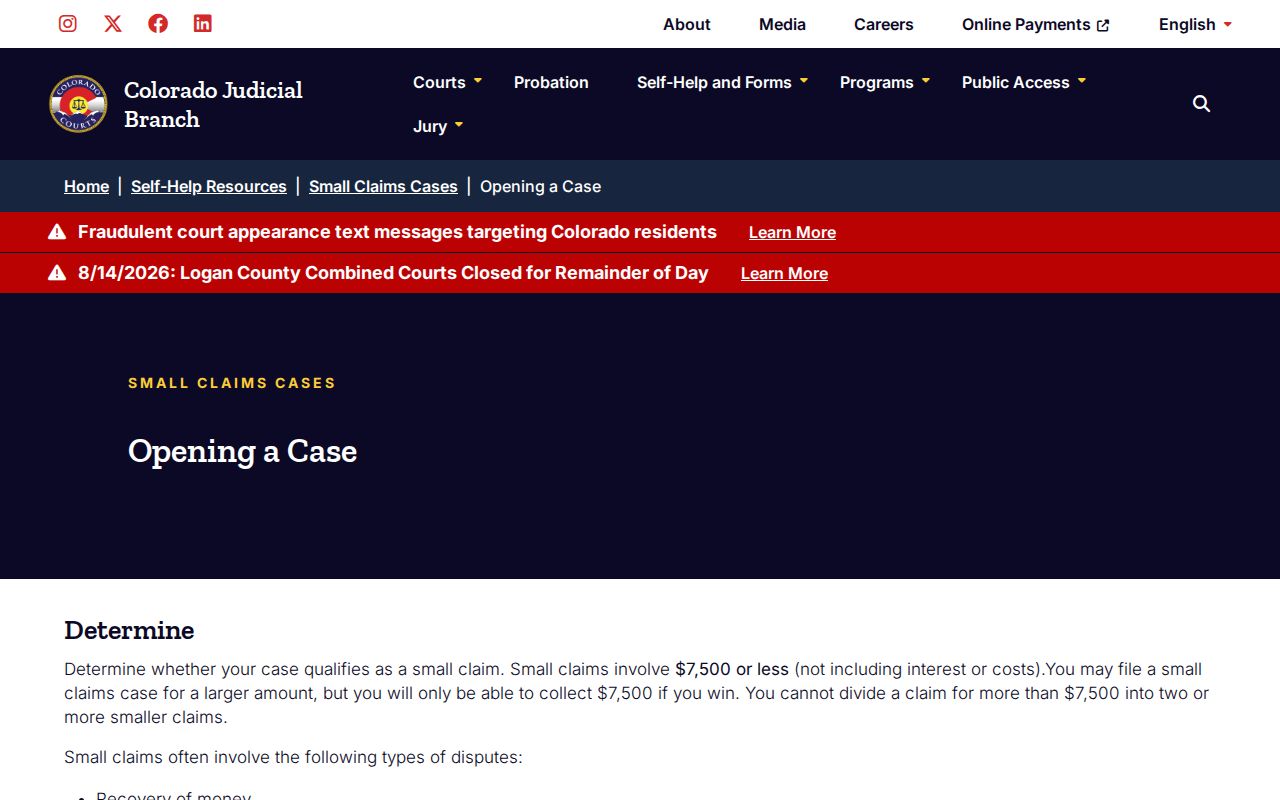
The local routing rule holds: a small claim stays a County Court division matter. It never becomes a District Court general civil case.
Civil Dockets: What They Show
Every Phillips County civil ROA opens with the year, class, sequence, court, division, filed date, and status. Public party roles and counsel come next. From there, case events appear in date order, spanning the complaint or petition, service, answer, motion, response, order, notice of setting, hearing, trial, judgment, dismissal, writ, satisfaction, and appeal.
| Case identity | Class, year, sequence, court, division, filing date, caption, and status. |
|---|---|
| Party roles | Plaintiff and defendant, or petitioner and respondent, plus public attorney links. |
| Service | Summons or citation and return entries that show procedural notice activity. |
| Filings | Motions and responses record requests and arguments, not necessarily court rulings. |
| Outcome | Judgment, dismissal, satisfaction, or appeal entries, with documents held by the clerk. |
Where public, the financial section may list a judgment amount, court costs, or satisfaction activity. It will not spell out every operative term. Rely on the filed judgment or order, not a short database label.
Phillips County Civil Docket Class Codes
Those letters in a civil case number do real work. They steer a docket search toward the right court and procedural track. A number like 2026CV11 signals a general civil District Court case. The other classes break down simply. C stands for county civil. S means small claims. DR marks domestic relations, and PR marks probate. For the class itself, the exact notice or pleading beats any guess.
- CV
- General civil work in Phillips District Court.
- C
- County Court civil work within its monetary and subject limits.
- S
- Small Claims division cases.
- DR
- Domestic-relations matters, with access limits for some content.
- PR
- Probate matters, where protected documents may require authorization and ID.
Case class earns its keep when a name search returns too many rows or none at all. One person can show up across several case types. A single appeal can even spawn a second number at the receiving court. Search the class shown on the most recent document.
What Cases Fill the Civil Docket
The civil docket in Phillips County spans contract and property disputes, money claims, eviction proceedings, and protection orders. Name changes, domestic relations, probate, and other civil matters appear there too, within each court's authority. The class marks the broad track. It does not replace the complaint or petition, where the actual claims live. Petitioner and respondent labels sound procedural, not criminal. Those roles fill domestic and probate files every day.
Probate runs on its own official route. The Colorado Judicial probate-registrar listing covers how that route is administered.
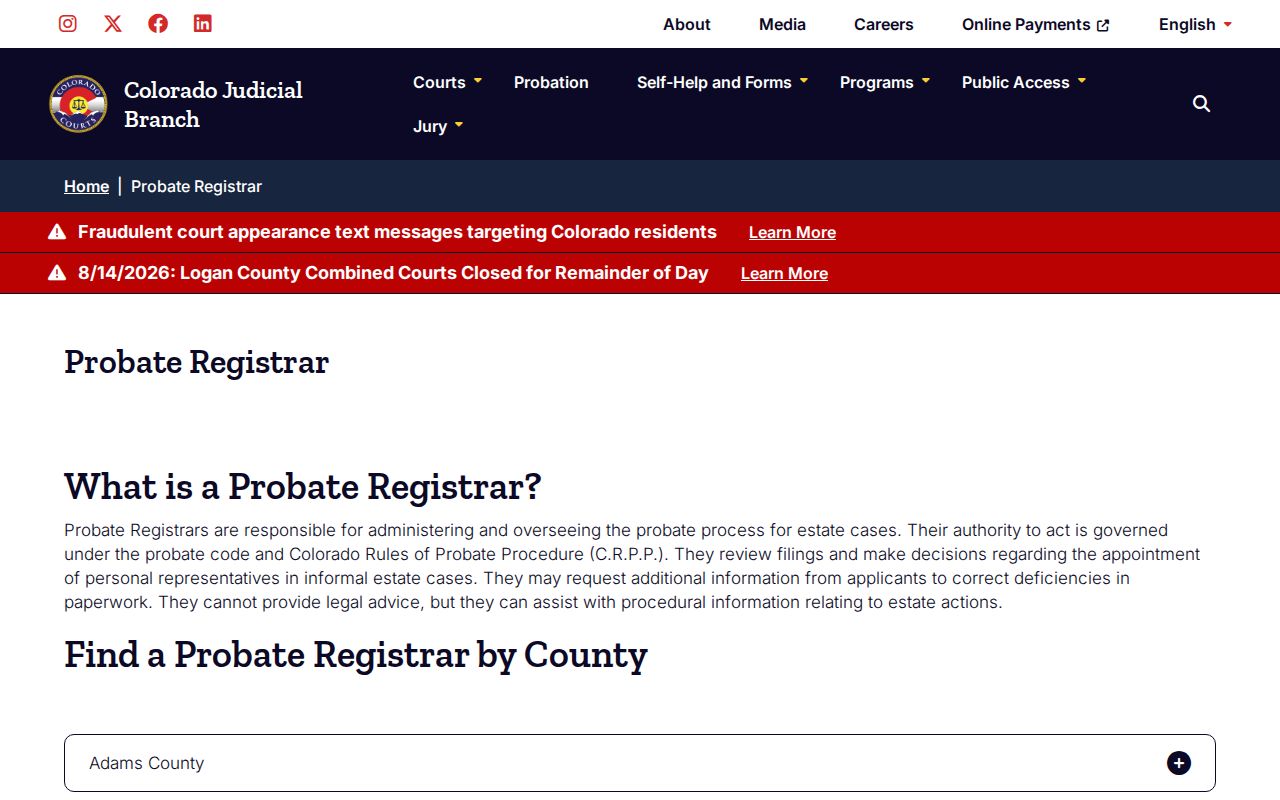
Probate differs from ordinary money claims in one key way. Case-level data can be public. Protected filings stay withheld, or open only to an authorized requester.
Bankruptcy never lands on the Phillips state civil docket. The U.S. Bankruptcy Court for the District of Colorado runs that separate federal system.
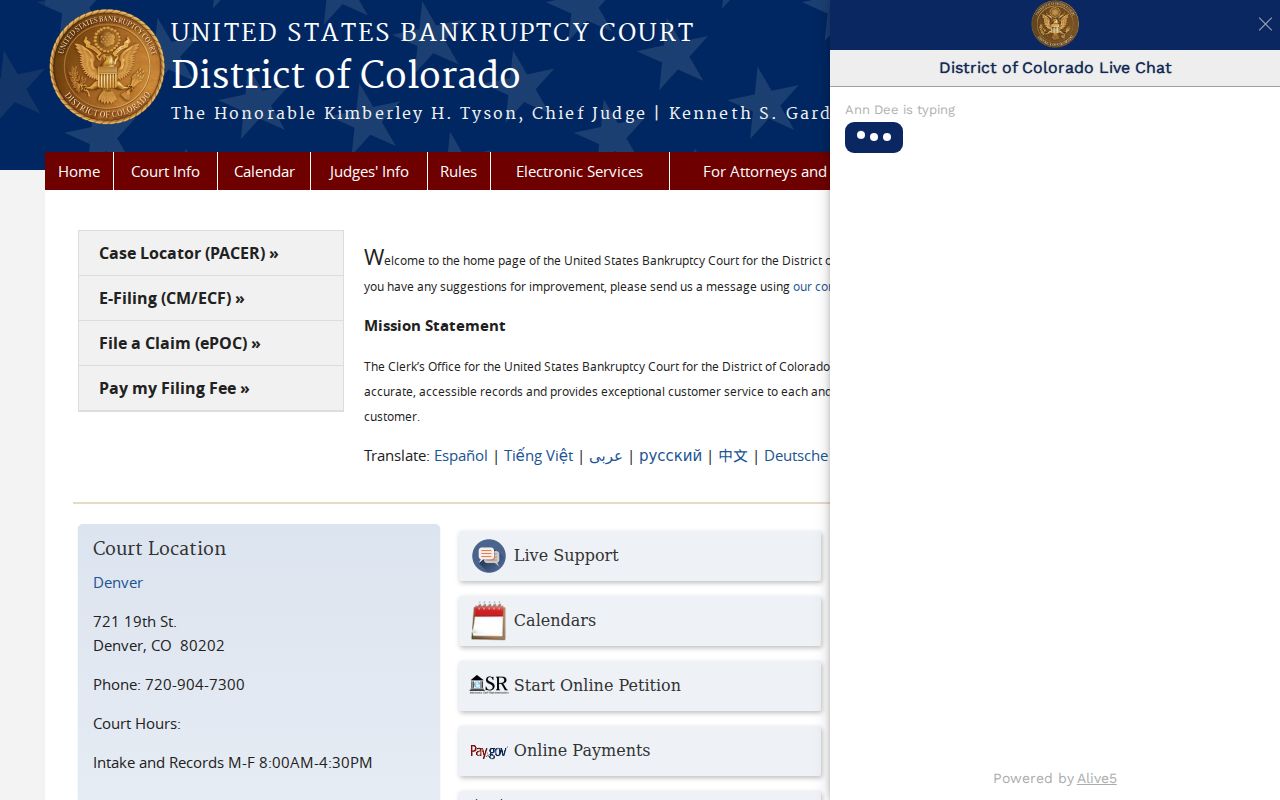
That federal court keeps its own numbering. PACER and federal CM/ECF numbers never merge with Colorado civil case classes.
Phillips County Civil Docket CCE Access
Colorado Courts E-Filing, or CCE, is a filing workspace. It is not an open civil docket search. Licensed attorneys can file through CCE in listed District and County civil matters. Self-represented users get a narrower door. Registration works for an existing case only, in eligible domestic-relations or eviction tracks. The eviction must already be opened with the court. Once registered and opted in, access approval can take up to two business days.
The official CCE non-attorney page spells out those limits and the registration steps.
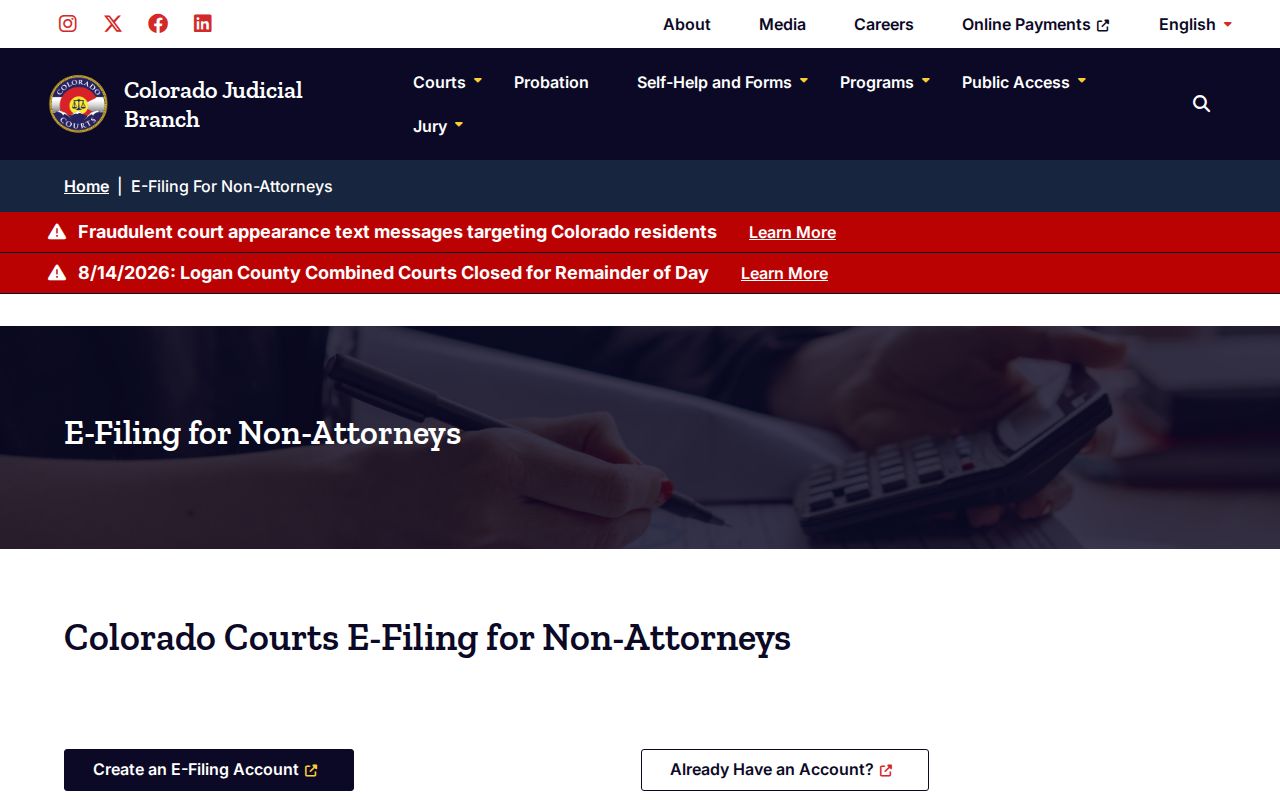
The rule is narrow: your own case, nothing more. CCE is not a way to browse another public civil file.
For the full program details, the Colorado Courts E-Filing page is the official source.
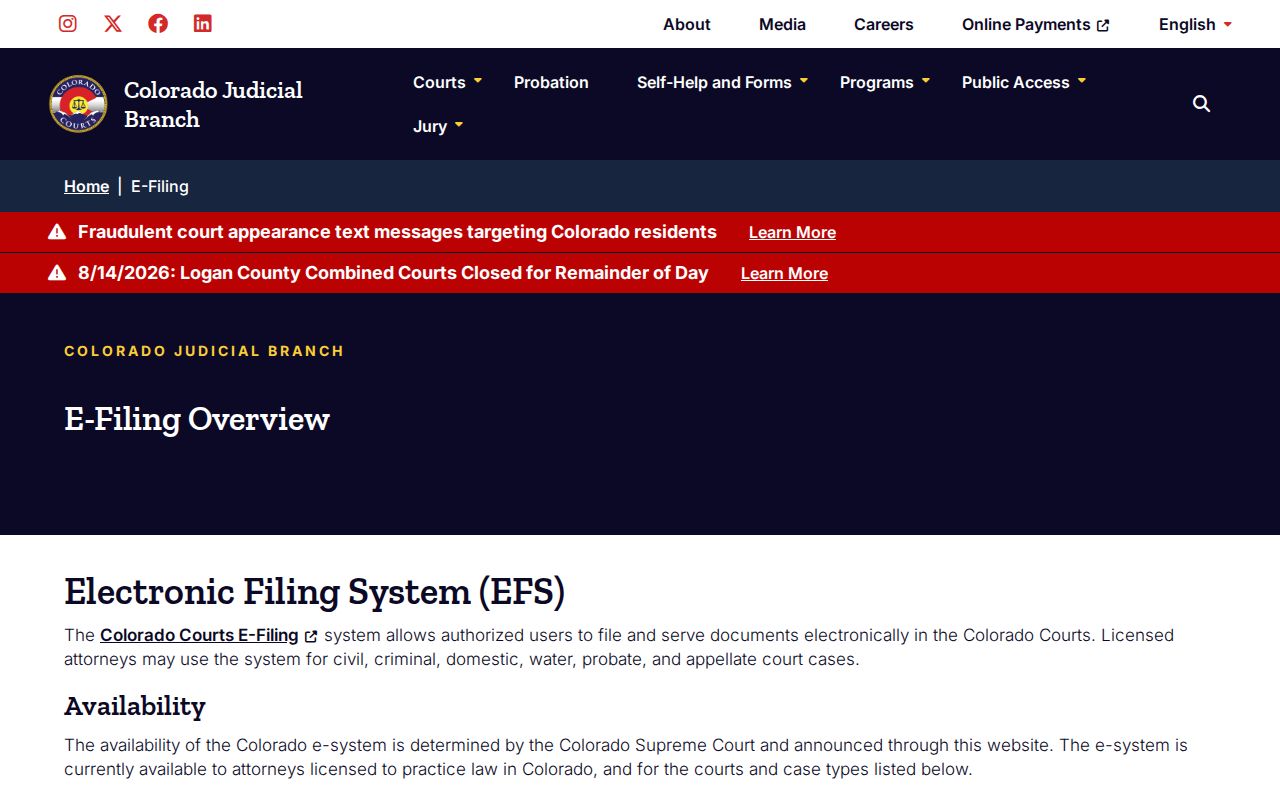
Two charges come with CCE: a $12 filing charge and a separate $12 service charge. The official page sets them apart from statutory court filing fees and copy fees.
Hearings on the Civil Docket
A single line on the Phillips County civil docket calendar can carry a good deal of detail. Look for the setting type. It may be a status conference, motion hearing, pretrial conference, show cause hearing, or trial. Some rows add the date and the start time. You may also see a time estimate, the appearance type, and the courtroom. An empty appearance field means nothing about attending remotely. In Phillips County, you show up in person unless a court order says different.
Always pair the newest notice or order with the public calendar. A continuance or reset replaces the old date; it does not dismiss the case. The clerk can tell you what the docket shows. Yet only the judge can grant a continuance. The lag between a signed order and the public display is not published anywhere. So double-check any date that is close at hand.
Motion versus order: A filed motion shows what a party asked the judge to do. It does not show that the request was granted.
The newest signed order wins. It controls the outcome and the next deadline, while calendar rows are only planning aids that prove nothing about the merits of a ruling.
Phillips County Civil Docket Judgment Trail
A Phillips County civil docket usually moves in a set order. The complaint or petition comes first, then service, a response, motions, settings, and judgment. Service deserves special attention. An unanswered complaint is not automatically ripe for default. The service entries and the governing procedure have to support that step first. Judgment rarely closes the book. The register can keep growing with writs, abstracts, garnishment activity, a Transcript of Judgment, a Certificate of Satisfaction, or an appeal.
Civil docket flow: Complaint › Service › Answer › Motions › Hearing or Trial › Judgment › Enforcement or Satisfaction.
Short labels on a Phillips County civil docket ask for caution. A case marked “Closed” or “disposed” does not tell you the ending. It may have ended by judgment, voluntary dismissal, settlement, or some other order. “Satisfied” points to a recorded satisfaction event, so check it against the certificate. A dismissal without prejudice can differ sharply from one with prejudice. For the exact effect, read the filed document itself.
Appeals open a second track. A County Court appeal goes to District Court. That step creates a second docket. District Court appeals ordinarily move on to the Colorado Court of Appeals. Whenever an appeal or remand appears, check both numbers. Look at the origin case number and the receiving one.
Who Can See Civil Dockets
Chief Justice Directive 05-01 governs access to Colorado court records. It weighs openness against privacy and legal limits. Public civil ROA data can be inspected. Remote access is narrower than what you get at the courthouse. Sealed records, protected family information, juvenile material, personal identifiers, and some probate content may be limited or withheld. An authorized person seeking suppressed, juvenile, probate, or protected material may be asked for a government-issued photo ID. Showing that ID does not itself create a right to see the file.
Public access boundary: The free docket is a hearing list, an approved vendor supplies a nonofficial ROA, and the clerk controls filed and certified documents.
The Colorado Open Records Act does not convert a specific civil court file into an administrative-record request. Case-record access runs through CJD 05-01, the applicable statutes, court rules, and orders. P.A.I.R.R. Rule 2 covers Judicial Branch administrative records. So it is no shortcut to a protected civil filing.
A missing online hit can mean many things. The name may be misspelled. The class may be wrong, or the file archived. The case may be restricted, or the index simply delayed. None of that proves the matter never existed. Ask the Combined Court clerk which access route fits your situation.
Phillips County Civil Docket Filed Orders
Vendor civil dockets stop short of the filed complaint, motion, order, or judgment image. Once you have the case and date, turn to the Record/Document Request Form. Civil options include Order for Judgment, Transcript of Judgment, Satisfaction of Judgment, Protection Order, ROA, and “Other Documents.” Give the exact title and filing date where you can. A certified or exemplified copy runs $20 per document plus applicable copying.
Careful with names here. A Transcript of Judgment is a $25 clerk product. It reflects the judgment, not a word-for-word transcript of a hearing. For spoken proceedings, note the hearing date, the judge or division, and the case. Then ask the clerk which official reporter or transcriber handled it. A Certificate of Satisfaction is a separate $20 product.
The Phillips Combined Court takes in-person requests at 221 S. Interocean Avenue, second floor, Holyoke. Published weekday counter hours are 8:00 a.m. to 3:00 p.m. You can also mail a request once payment and delivery terms are settled. Call 970-762-7010, email PhillipsClerksOffice@judicial.state.co.us, or fax 970-458-7742 to confirm the method and archive status. The ordinary response target is three business days. Off-site retrieval and redaction can stretch that. When you need a certified file rather than a docket entry, the broader Phillips County court case records route is the better fit.